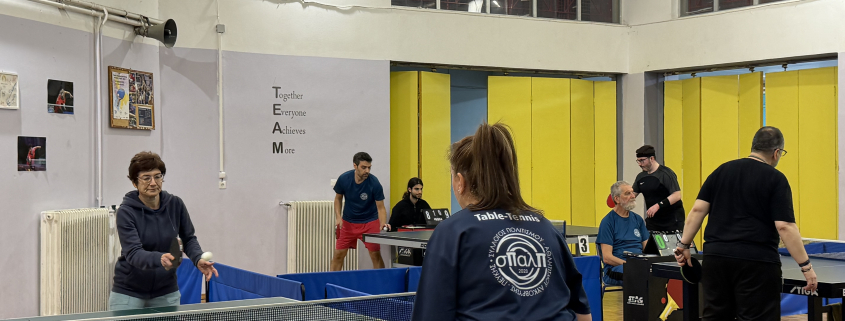
In a daily life filled with screens, rapid images, and constant distractions, concentration is an important skill for every child. But can a sport help them remain focused on what they are doing?
Table tennis is one of the fastest sports in the world. Its speed demands something from children that is not always sufficiently practiced in everyday life: continuous and substantial attention.
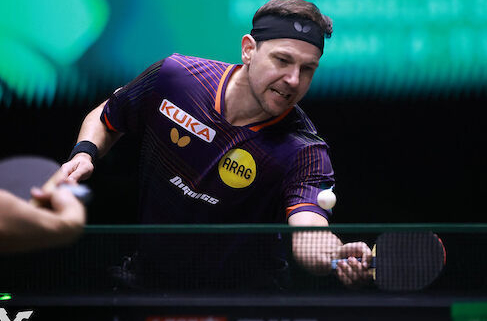
From the moment a point begins, the child watches the ball, calculates its speed, direction, and spin, and observes the opponent’s movement. In a very short time, they must decide how to react and coordinate their body and racket appropriately. If their attention is diverted, the ball has already passed.
Concentration through Play
In Table Tennis, no shot is exactly the same as the previous one. Each phase creates a new condition that requires observation, adaptation, and quick decision-making. The child learns to focus on the present, limit distractions, and recover after a mistake.
The continuous collaboration of vision with hand movement cultivates visuomotor coordination and fine motor skills. At the same time, basic executive functions are exercised, such as working memory, self-control, and cognitive flexibility—skills useful in both sports and the learning process.
A systematic review of 49 studies recorded positive effects of exercise on the executive functions of children and adolescents. A more recent systematic review and meta-analysis linked sports requiring reaction to constantly changing conditions with benefits in inhibitory control, working memory, and cognitive flexibility.
Movement and Emotional Development
As a non-contact sport, Table Tennis can be adapted to different physical abilities when taught with proper guidance. It improves agility, balance, reflexes, and movement coordination.
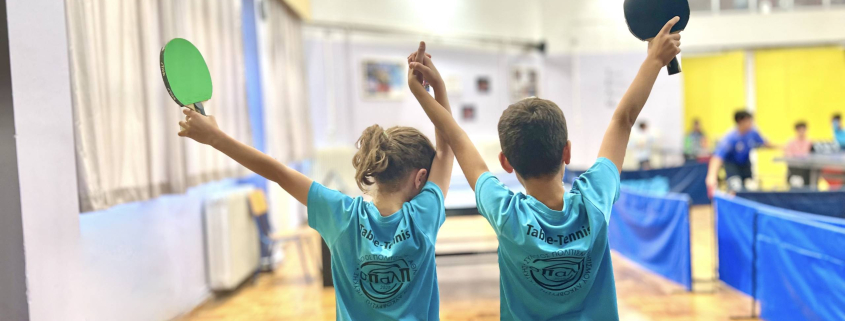
At the same time, each match is a small lesson in managing emotions. The child learns to deal with defeat, to celebrate victory with respect, to remain calm under pressure, and to continue their effort.
Table Tennis is not a cure for attention difficulties. However, it can offer a creative way for children to move, think, and cultivate their concentration.