Table Tennis After 50: Movement for the Body, Exercise for the Mind
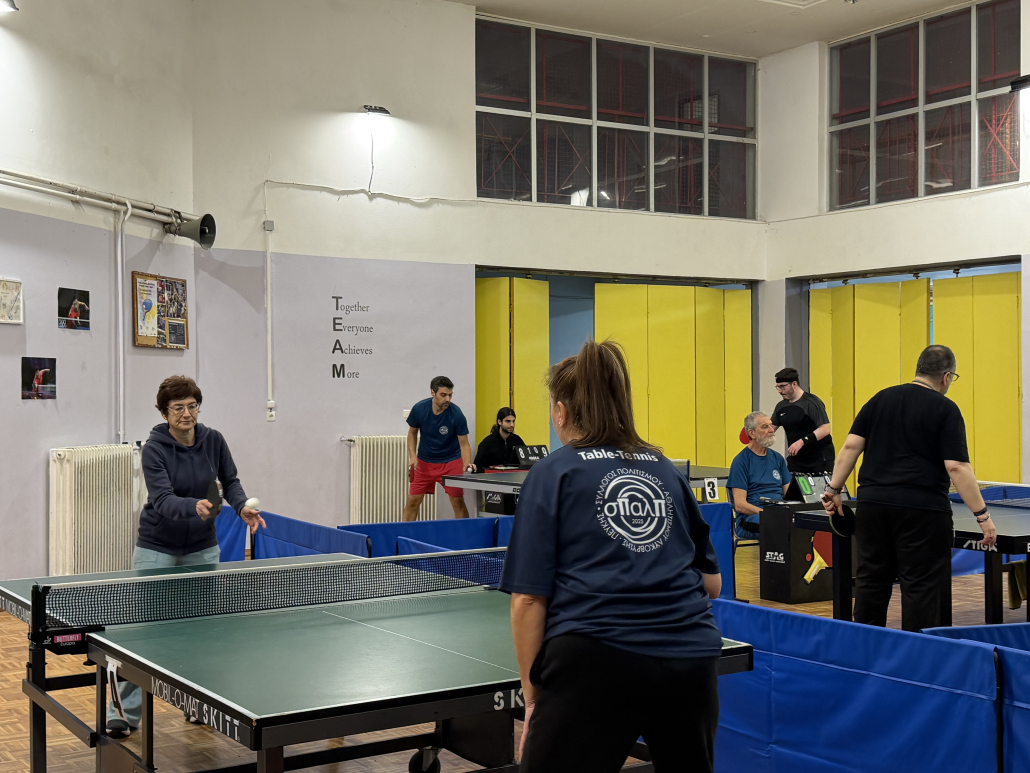
Who said exercise after 50 has to be boring or exhausting? Table Tennis proves that caring for physical and mental condition can become a game, daily enjoyment, and an opportunity for good company.
Movement for the Body
Table Tennis offers a dynamic form of exercise, the intensity of which can be adjusted to the age, physical condition, and experience of each player. The small and quick movements around the table activate the legs and core, while successive strokes engage the entire body.
At the same time, balance, agility, coordination, and proper weight shifting are cultivated—skills that become particularly important as we age. Compared to activities involving intense impacts or long-distance running, it can be a more accessible option when training is done with proper guidance and adapted to the player’s capabilities.
Exercise for the Mind
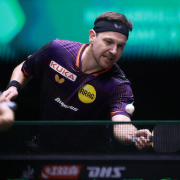
However, where Table Tennis truly stands out is in the continuous collaboration between body and brain. The player tracks the ball’s trajectory, speed, and spin, ‘reads’ the opponent’s movement, and decides how to respond in a minimal amount of time.
Every point is a small problem seeking a solution. Where will the ball go, how much force is needed, which stroke is most appropriate? In this way, concentration, reflexes, strategic thinking, hand-eye coordination, and quick decision-making are activated.
The Lancet Commission’s Report on Dementia includes physical inactivity and social isolation among the modifiable risk factors. At the same time, a scientific review on Table Tennis records encouraging evidence for potential benefits in cognitive function, clarifying that more clinical studies are needed.
Game, Communication, and Good Mood
Table tennis is also a deeply social sport. It offers communication, laughter, healthy competition, and a pleasant escape from daily routine.
You don’t need to be an experienced athlete to pick up a racket. Whether you played as a child or are starting for the first time, you can train at your own pace. Table Tennis is not a cure or a guarantee of dementia prevention. However, it is an enjoyable way to keep your body, mind, and social life active after 50.
This post is also available in: